When Experience Stops Working

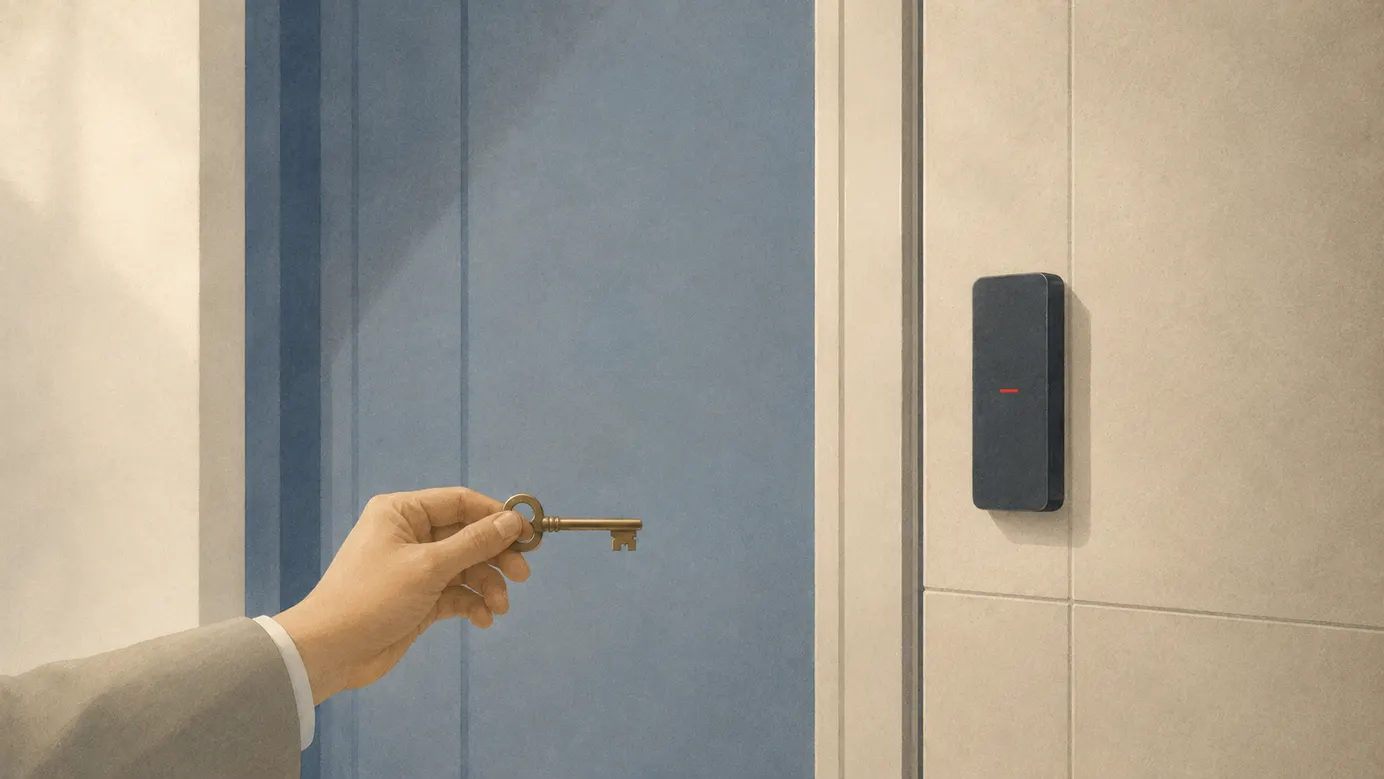
Summary: What happens when the world stops responding to your experience in the way you were taught to expect?
What happens when the world stops responding to your experience in the way you were taught to expect?
We’ve all known the person to call when things get difficult. Usually, it’s someone who’s seen enough of life to know what actually matters. They have the experience, the judgement, and the track record. Their ability to read a situation comes from years of practice. Their wisdom from knowing what instinctively needs to be done. We all know people who’ve run businesses, led teams, and built projects from scratch. They’ve handled situations that would floor most people half their age.
They’re the type of people you admire and want to be around when things get hard. Perhaps one of them was you.
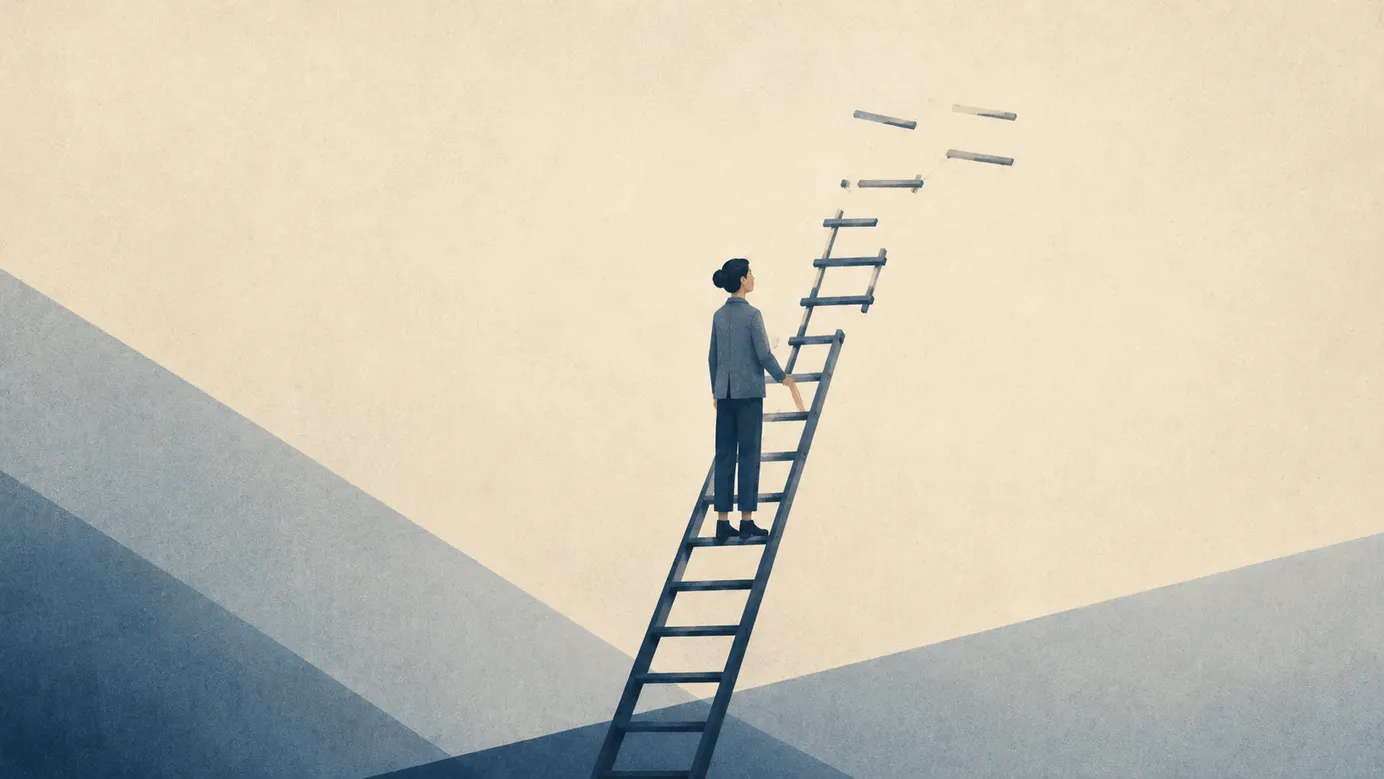
Not once does anyone call your ability into question. But then one day, something on the periphery stops producing what it always used to. Experience that once travelled everywhere starts to feel strangely local. In some rooms, it speaks for itself. In others, it’s as if you’re invisible.
The feedback you used to receive in one form or another, the sense that things were moving nicely along, the pat on the back, the usual confirmation that your work was still valued, starts to arrive more slowly. Sometimes it doesn’t arrive at all. The doors that used to open off the back of your name and reputation are still there, but they no longer open as easily as they once did.
When this happens, many of us assume it’s a temporary thing. A dip in our confidence or a bad patch. So we revert to what we’ve usually done: put our heads down, push through, and trust that our efforts and reputation will convert, all while silently wondering whether it’s something about us that has changed.
But the problem isn’t us. It’s the world we’re operating in.
The World We Grew Up In
Most of us over forty-five grew up under different circumstances – the country we grew up in, the educational system we entered, the family we came from, and the values shaping our upbringing.
But beneath those differences, the same basic logic was at work. Work hard enough, and effort converts to progress. Build a reputation and it travels with you through life. Stay at the firm long enough, and the next step will come to you.
There was the bank that promoted you from within. The practice that made you partner if you stayed the course. The school that gave you a department to run because you had earned it. The hospital that handed you a ward. The agency that made you a director. The union that backed you up the ladder. The building site where the foreman became the site manager because everyone knew he was ready. The kitchen where the head chef had worked every section. The shop floor where thirty years meant something. The civil service grade that came with the years, almost automatically.
You knew where you were and what came next.
And you could see what the years produced in the people around you. The partner who made it because she never missed a deadline in fifteen years. The engineer who became the person everyone called because she had seen every version of the problem before. The consultant who knew which questions to ask before the client had finished the sentence. The plumber who could hear what was wrong before he opened the wall. The nurse who spotted what the junior doctors missed. The teacher who could read a classroom in thirty seconds.
That wasn’t just status. It was real depth. The kind that only comes from years of doing the same thing, over and over, until you stop thinking about it and just know.
Effort in, progress out. The deal held.
And those habits are still running. That is precisely the point.
The World We’re In Now
Then comes a point when something changes. You can’t always name it. It’s something that arrives gradually, more like a slow realisation than a defining moment. It comes in patches, but in enough places for the old logic to start producing different results.
You bring your experience into a room and someone half your age gets the credit. You joined a dating app, and the hits don’t come the same way you expect. You walk down the street, and you don’t quite catch the eye of strangers the way you once did. You apply for the role you were more than ready for a decade ago and heard nothing back. You recommend something — a restaurant, a film, a way of doing things, and the people around you smile politely and do it their own way. You offer to help and realise, halfway through, that nobody was really asking for it.
And the path that always used to reveal itself just…..doesn’t anymore.
None of this is about losing a step. Most of us at this point in life in are sharper, more considered, and better equipped than we have ever been. Our judgment is deeper and our ability to see around corners, to know how something is going to play out before it usually does, has only grown.
It’s not you who has changed, but the world you’re operating in.
And that world no longer works the way the one we grew up in once did. Our world rewarded accumulation and credentials travelled. Seniority meant something. A reputation built over years opened doors that stayed open. You could see where you were and roughly where you were heading.
The world we are in now is less legible. It doesn’t automatically recognise what you have spent years building. Sometimes, it feels like it doesn’t even care. The feedback loops are different. The timescales are different. The relationship between what you put in and what comes back is no longer reliably connected. And sometimes the gap between them makes no sense at all.
In my Substack Out of Line, I call these two worlds Certainia and Randomia — one where effort and competence reliably translate into forward movement, and another where the same inputs produce unpredictable results. The fuller version of that argument is there for anyone who wants it. What matters here is simpler.
The map you built over thirty years is accurate. It is just a map of somewhere else.
One Foot In, One Foot Out
So where does that leave you? One foot in the world the map was drawn for – the world of professional identity, your sense of what counts as legitimate progress, and the expectation that your knowledge and skills will be recognised in the ways they always used to be. You’re still running that logic and still measuring progress against it.
But then, your other foot is in territory it was never designed to cover. Freer, and in some respects less structured. But operating on entirely different terms.
Straddling these two worlds can feel like you’re holding a map of Berlin in your hands while on vacation in Ireland.
The straddle itself isn’t the problem. It’s the condition.
And that condition is far more common than you might think, because our culture has almost no language for it. You’re too active to be described as ‘retired’ and too experienced to be labelled as ‘emerging.’ You’ve gone too far into the new world to go back, but not far enough into it to feel at home there.
That’s when we usually reach for certain labels, like ‘reinvention,’ ‘transition,’ or ‘next chapter,’ because they all suggest movement toward something and offer us temporary comfort. But when you’re standing in both worlds at once, there’s no movement. The straddle is something else entirely. There’s no movement, and the old playbook has nothing to say about it.
Reading the Wrong Map
What makes the straddle genuinely disorienting isn’t the uncertainty of it all. Most of us in this life stage have dealt with uncertainty before.
What is new is how we misread things. We keep doing what worked before: planning carefully, building steadily, and waiting for the next logical step, not realising that the standard we’re measuring against has changed.
And because these approaches feel so familiar, because they worked for so long, it’s hard to see that they’re producing the wrong read. After all, if your plan looks reasonable and you’ve put in the right effort, why would the logic not hold up?
That’s why this feeling is hard to name. There’s nothing that announces it – just a nagging sense that the effort you’re putting in is no longer having the same effect it used to. The feedback you used to get back is much quieter now, leaving you with an uncomfortable feeling that something just isn’t adding up.
This is when it can start to feel like personal failure. But it isn’t. It’s just what happens when you keep using the wrong map.
So Where Does That Leave You?
Most people arrive at this stage of life without any name for what they’re experiencing. It turns out that’s not a coincidence. Our culture just hasn’t caught up yet.
We grew up in a world with clear rules and a pre-set life sequence. But we’re now operating in a world where those rules no longer quite hold. We’re living longer. The old linear learn-earn-retire model is evaporating, and faster than most of us expected. – fast. And so here you are – running the old logic because that’s the only one you know, while sensing that something has stopped working the way it should.
Naming that matters because once you name it, it stops feeling like it’s your fault.
It’s not your competence or life experience that’s the problem. It’s just that the rules they were built for have changed, and nobody bothered to tell when, or how, or why.
Once we know that, things start to get easier.