If Something Feels Off, It May Not Be You


Summary: When life no longer follows the path you expected, it is easy to mistake the uncertainty for personal failure.
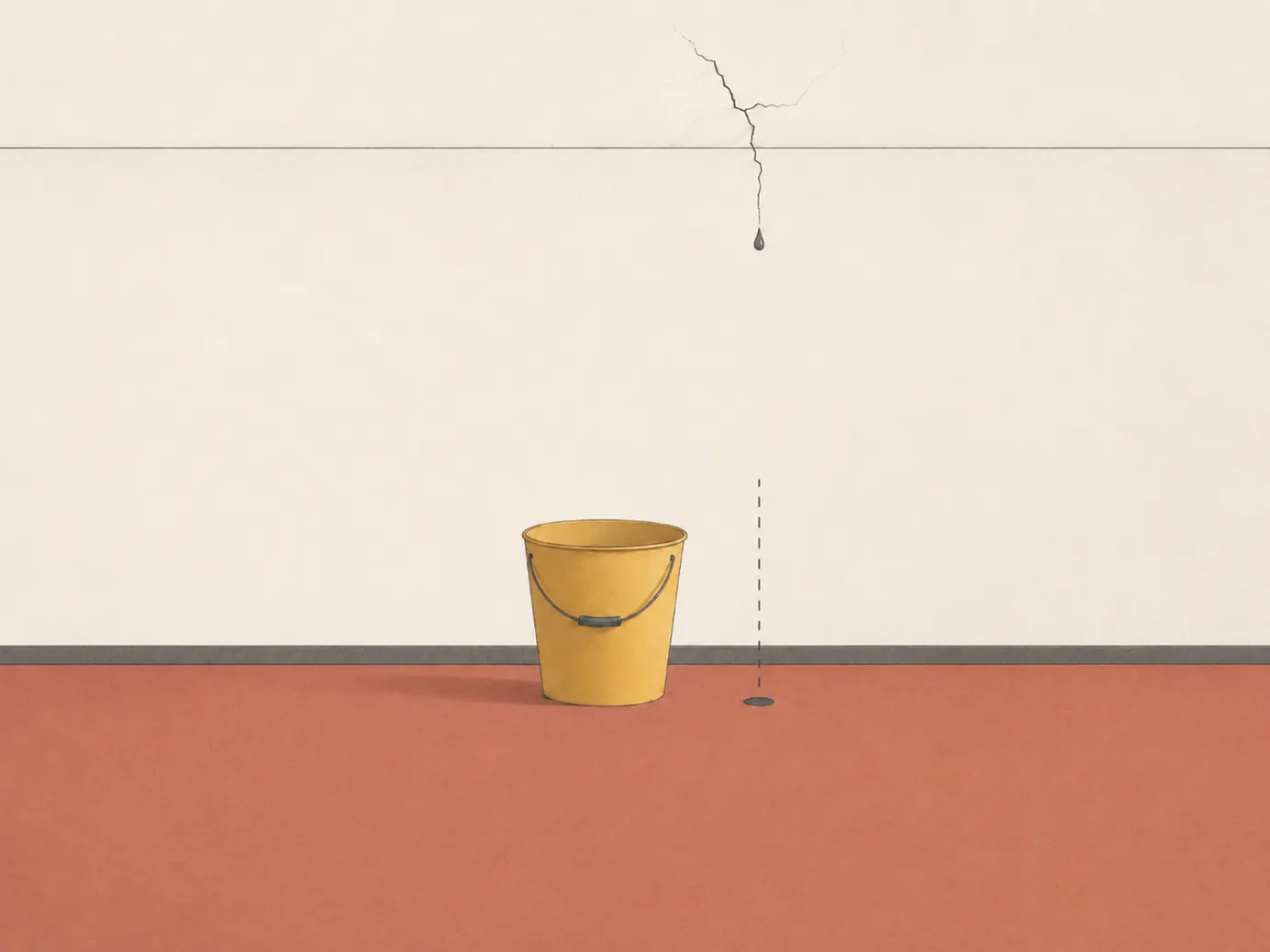
It’s the kind of feeling that comes in small bouts, usually when things are going fine. When you’re cruising on the highway after the traffic has died down, or on a Sunday evening when the week ahead looks like it’s all under control. Nothing needs fixing – and yet.
There it is – that feeling again.
You did what you were supposed to do. You worked, adapted, made sensible decisions, and kept things moving along. Of course, there were the ups and downs. You muddled through everything as best you could, building a life around the ideas and options that were available to you: work hard, stay useful, make progress, provide, plan, and keep going.
And over the years, it all seemed to make perfect sense. There were roles to step into, projects to take on, and goals to aim for. There were also the usual signals indicating whether you were moving in the right direction: job title, home, family, responsibilities, plans. A little imperfect, yes. But still very recognisable, and with a clean sense that there was a sequence to life.
And then, one day, the signals grew less clear.
It’s not as if your mental radar was broken. You kept going. You were still capable, still functioning, still putting in the effort. By most outside measures, every aspect of your life looked intact.
And then – there it is again. This feeling that’s hard to place. The next step is no longer clear. The things that used to tell you whether you were doing well have stopped giving a clear answer. Yes, the life you built for yourself exists, but it no longer tells you what comes next.
And, because everything appears normal, because there’s no major crisis to point to, this feeling that keeps surfacing becomes easy to mistrust. You start to wonder whether you’re ungrateful, restless, or simply asking too much. Or are you falling behind? Is this simply what happens at this stage of life? Should you just put your head down, ignore the feeling, and get on with it?
The unease remains – not always visible, but present. A lurking, persistent sense that the life in front of you no longer quite fits the structure you were given.
Private Verdicts
When those reliable life signals stop working, our minds start looking for a cause. And because there is no obvious evidence of external failure, it starts looking for someone to blame. At first, they arrive as isolated flickers – thought fragments that pop open before you’ve had the time to build an argument or decision around them.
That in itself is a mercy, sparing you from having to confront the bigger questions about midlife, time, identity, or how your life is holding together. Instead, the thought arrives like a fly you could almost swat aside. A sentence you could barely notice yourself thinking.
I should have figured this out by now.
I'm behind.
Everyone else seems more settled.
If I were really capable, my life would look so different by now.
And then, sooner or later, the one that draws the curtain.
Something must be wrong with me.
And because they’re just flickers, these thoughts carry an air of practicality – responsibility even. They often appear when you're looking at your finances, thinking about work, noticing someone else's life, or trying to work out why a decision that should feel straightforward doesn't.
But the core of each one looks remarkably similar.
Something feels off. The cause must be me.
That is your private verdict – kept inside, turned over quietly, and not always fully believed. But it’s present enough to taint the way you read everything that follows
But despite its air of practicality, the verdict assumes that whatever happened and what it came to mean are the same thing. An outcome is one thing. The script attached to that outcome is another.
Losing your job is an event. Your life failing is a script. Not knowing what comes next is one thing. Concluding that you should have known by now is another.
And because we’re natural-born storytellers, it’s always the script that wins the day over the event itself. The story tells you what the change means before you have had time to understand what has actually changed. We turn an event into a judgment. A change becomes something we should have prevented, or a period of uncertainty becomes proof that you were never as capable as you thought.
But they are not the same thing.
Your life can change direction without it being a failure. A role can end without cancelling the person who held it. A plan can fall apart without proving that you were foolish to make it in the first place. If you’re going through a period of feeling lost, it doesn’t mean you’ve lost the plot permanently.
Yes, what happened is real and may need your attention. But the verdict you’ve reached about what it says about you – that part needs challenging.
Someone Else's Blueprint
The thing about these verdicts is that they feel personal. And they’re personal because you were taught to read things that way.
Think about it. Nobody ever said: If life stops following the expected sequence, that’s a life design problem, not a personal one. What they said, or showed or implied, was the opposite. If you work hard enough and make the right decisions, life will fall into place. Come off that path, and the shortfall is yours.
So the issue then may not be that you have failed to manage your life properly. It may be that the life you were taught to expect no longer matches the life you are actually living.
Most of us absorbed some version of that. Nobody physically sat you down and spelt it out, because they didn’t need to. It usually arrived through example, through the movies and the TV shows, the advertising, through the advice you were given by people older than you, through watching the people around you, and through the ordinary background noise of adult life.
It wasn't just Benjamin Franklin's 'early to bed, early to rise makes a man healthy, wealthy, and wise.' Feed enough of that diet to someone, and the message becomes consistent enough: do the responsible things, keep going, build something, and life should gradually become more settled.
Nike said it in 1988 with 'Just Do It.' The results, of course, were implied. LinkedIn spent the 2010s selling the idea that the right profile, the right network, and the right amount of hustle would build the career you deserved. And every financial services ad from the last thirty years has been selling you a version of the same ending: save responsibly, stay the course, and the future will arrive on schedule.
The clothes and technology might have changed. But the promise has been remarkably consistent over the decades: give it time, effort, dedication, and patience, and you will become more secure, more certain, and more recognisable to yourself.
Of course, when things don’t turn out that way, it’s only natural for us to conclude that the failure must be yours, that you didn’t work hard enough, want it badly enough, or stay the course long enough. That somewhere along the way, you let yourself down, and you’ve only yourself to blame.
But there is another reading.
We often talk about lifestyle design in the aftermath of something – a redundancy, a divorce, a milestone birthday, or a week away where you finally had time to think. We treat it like a luxury, as something we get to do when the ordinary pressures have eased enough to take stock.
But what if your life had already been designed for you – without you ever having had a say in it? And what if the structure you inherited no longer fits the life now in front of you?
The roles that once organised your life – the professional, provider, partner, parent, and responsible one with the plan – may still be intact. But they no longer carry the same authority. They no longer give you a clean answer about what to do next or who you’re supposed to be now.
So, when that inherited structure no longer explains your life as clearly as it once did, the discomfort it creates can feel almost identical to personal failure.
But that doesn’t mean the failure is yours. The discomfort is real. But it may be pointing to something the old script never gave you language for: a life that no longer fits the structure it was supposed to follow.
Not: you have failed.
But perhaps: the structure you inherited no longer fits the life you’re actually living.
Unmarked Open Ground
And this is precisely why the feeling is so difficult to explain to anyone, including yourself.
Instead of there being a clear signal that something went wrong – a drama, crisis, or an obvious mistake – there’s just this gradual, almost imperceptible sense that the life you’ve been building until now no longer has quite the same shape.
Everyone around you may still see you working, earning, caring, being responsible, and showing up for the things that need showing up for. Nobody would suspect a thing.
But deep down, you know something has shifted. The future that once seemed to arrive in recognisable stages – the next role, the next responsibility, or the next milestone– now feels less like a clearly signposted path and more like unmarked open ground. Vast, but with no clear way through it.
That is the uncomfortable part.
It’s not that you’re out of options. You may have more of those than ever before. But without a clear sense of where you’re headed, options can feel more overwhelming than liberating. You might have more experience than you have ever had, but if the world is giving you fewer clear signals about where to point it, that experience can start to feel more like ballast than an asset.
You have more behind you now than when you began. The problem is that nobody’s telling you what to do with it next.
If you’re thinking this way, you are probably not alone. And it’s certainly not a coincidence.
Researchers who study how lives unfold over time have been tracking this for years: the neat progression that once carried people from one life stage to the next – reliably, predictably, and in roughly the right order from education to retirement – has become far less reliable for far more people.
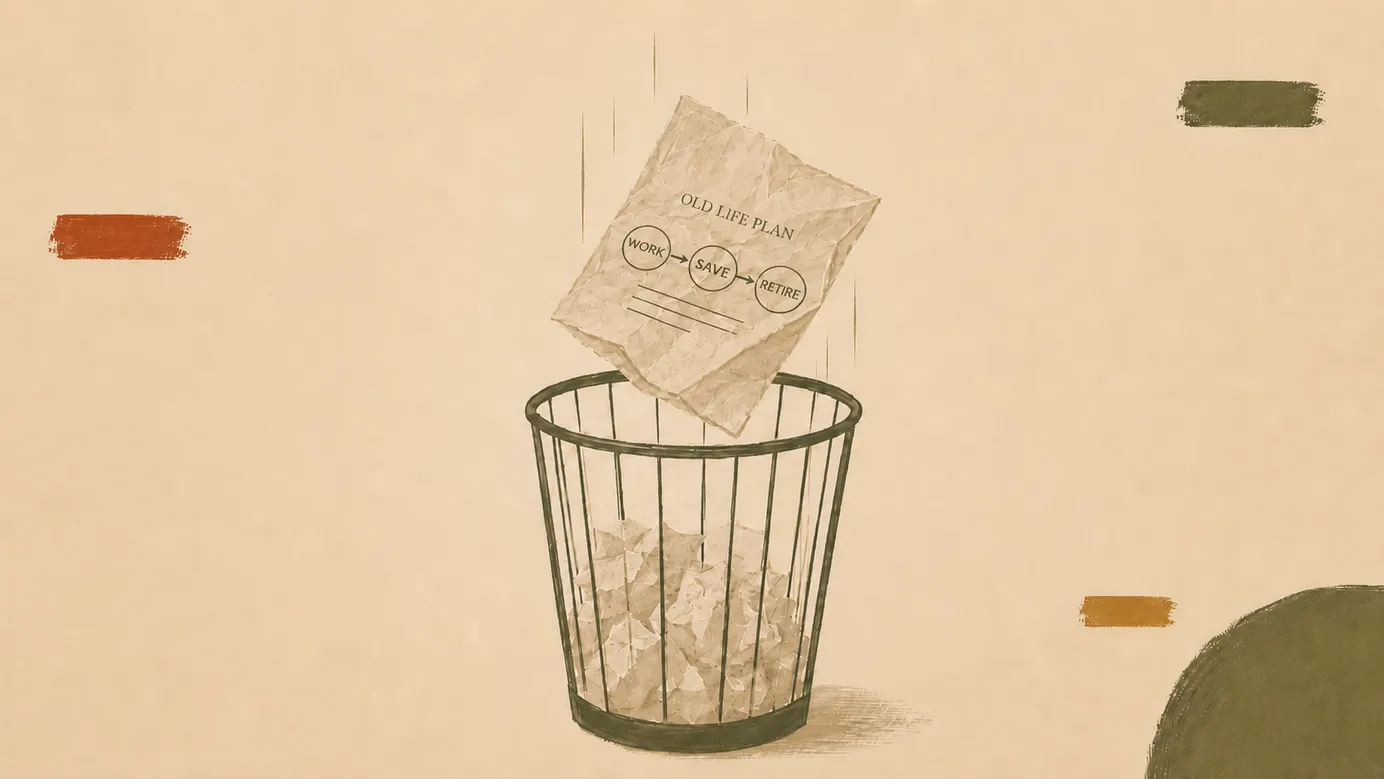
And once you find yourself in that kind of modern complexity, with more pressures the older model simply didn’t anticipate, with more transitions, more competing responsibilities, more uncertainty about what a settled life is even supposed to look like – it’s no wonder the three-stage model – learn, earn, retire – starts to buckle under the weight of it all. Life is more mult-staged than it used to be, with gaps and overlaps, detours, and doublings back, arrivals out of order, and some that never come at all.
Measuring yourself against a straight line through all that starts to feel not just unhelpful, but actively punishing.
That doesn't make the feeling easier. But it does mean you’re not imagining it – and you’re almost certainly not alone.
Different Rooms, Same Question
And once you begin to realise the feeling is real, that’s when you notice all the places it shows up. Never quite as melodrama, but as small changes in the texture of your life.
Your diary may be packed, but your days feel oddly without direction. People may still depend on you, but the roles you’re carrying no longer give you the same sense of purpose. Decisions that once felt practical, such as whether to stay or move, stop or continue, spend or save, work more or work less, now feel harder to make than they should.
You’re back to that feeling where nothing feels broken, but things you thought had closure are now triggering questions again.
In work, it may show up anywhere your effort is used to give shape to your day: a business, a trade, a profession, a practice, a project, a role you carried for years. You may still be doing the work. You may still be good at it and know exactly how it should be done. But the work no longer explains your life the way it once did.
The old contract – effort for progress, dedication for security, work for the sense that things are coming together – has stopped reflecting the exchange somewhere along the way. And you’re not quite sure when that happened.
But work isn’t the only area. In money matters, it tends to surface as a nagging unease around the idea of enough. It’s no longer sufficient to know whether you have enough saved, earned, or invested, although that question is probably never far away. Now it’s about whether the old idea of a financial finish line – retirement – still makes sense at all.
That question gets harder to answer when increasing human lifespans turn out to be longer than the model ever assumed, work is less linear than you planned for, and the future refuses to arrive as one clean, predictable endpoint.
And the question of identity can be the hardest of all to name. You may still recognise the person you became inside that old three-phased structure — the professional, the provider, the partner, the parent, and the responsible one who held it all together. But in today’s nonlinear world, that structure may no longer be the whole story. Something else is trying to push through. And you just haven’t found the words for this yet.
These are not three isolated problems, as much as they may feel that way. And work, money, and identity are not the only places where this loss of fit shows up. You may feel it in the places you live – whether your home still makes sense for the life you’re actually in. It could be in your relationships, such as friendships, family, and colleagues, as the structures around you shift. It could also be in how you think about your health, how you spend your time, and what you’re still trying to build.
Wherever it appears, it tends to point to the same underlying question. And that question might be worth sitting with, because it may be the one you haven’t yet thought to ask.
Asking the Wrong Question
By now, the pattern should be easier to see.
When life stops giving clear signals about where you're headed and what comes next, our mind can’t deal with the uncertainty. It looks for something to blame – a cause. And since everything appears normal to the outside world, there's no obvious external culprit to point to.
So we turn inward and start rummaging around for the most available explanation: it must be you. And these tiny, persistent thoughts keep popping up even before you've had time to question them.
Something feels off. The cause must be me.
After all, how else would you deal with these things if not through a sense of maturity, agency, even? It’s not as if you're making excuses. It’s on you, and you’re owning it. And sometimes that's exactly right. Why bother other people when some choices do need facing privately, some things genuinely do need to change, and sticking your head in the sand helps nobody, least of all you.
But not every feeling of dislocation is proof that you got it wrong or you’re off track. Sometimes the problem isn't the move you made – or didn’t make. Often, it's that you're still judging yourself against an old three-staged life structure that no longer fits the life you're actually living.
You're asking why retirement, security, or that sense of finally being settled hasn’t arrived the way it was supposed to, when the model that promised it has passed its expiry date. Or you’re asking why life still feels unfinished, when the quiet, settled retirement you were promised may no longer be the destination more people actually reach.
None of this is imaginary discomfort. In fact, it’s signal. And the most honest signal you’ve had in a while.
There’s no verdict in that. No failing either. Just the clear signal that something in the old rusty structure may no longer fit – and the question you’ve been asking all this time is not the most useful place to start.
And if that comes as a relief, good. It’s supposed to. You still have choices to make, plans to make, conversations to have, and parts of your life that deserve an honest look.
Because where you start matters. And the question you lead with changes everything that follows.
So instead of asking: what’s wrong with me?
Try asking: what structure am I still trying to live inside?