Why the Old Rules Are No Longer Working


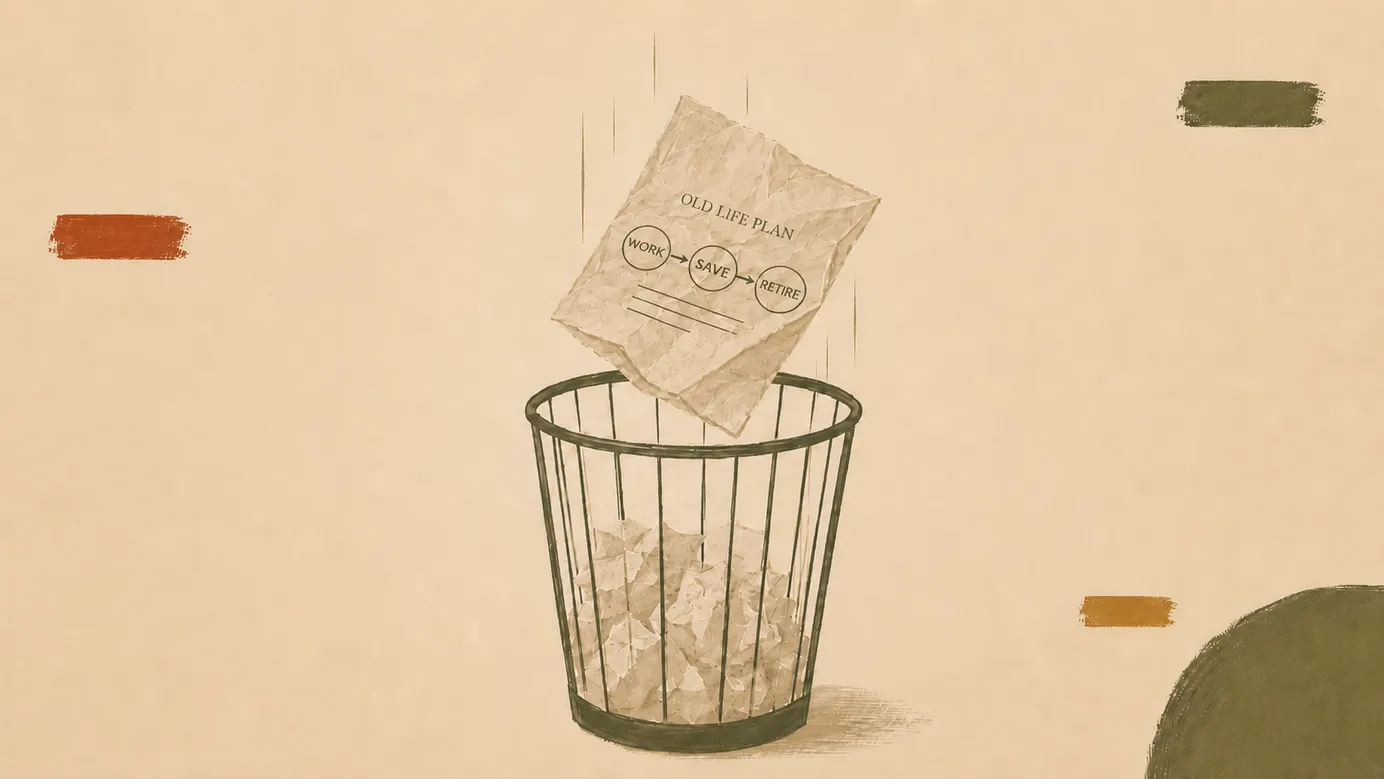
Summary: For years, the deal was simple: work hard, be sensible, and effort will lead to security. Most of us followed it. But then, one day, we discover it was all a condition after we'd already built a life around it.
Did you ever have that feeling of being confused about something, even though nothing has gone wrong?
You’re still showing up, still doing the work, still being useful, reliable, thoughtful, decent under pressure. Still making the calls, still supporting the people who depend on you, showing up for the things that matter – you know, the ones nobody notices if you do, but everyone notices if you don’t. No heroics. Just doing what most normal people do.
And yet, somehow, the world around you is giving you different signals.
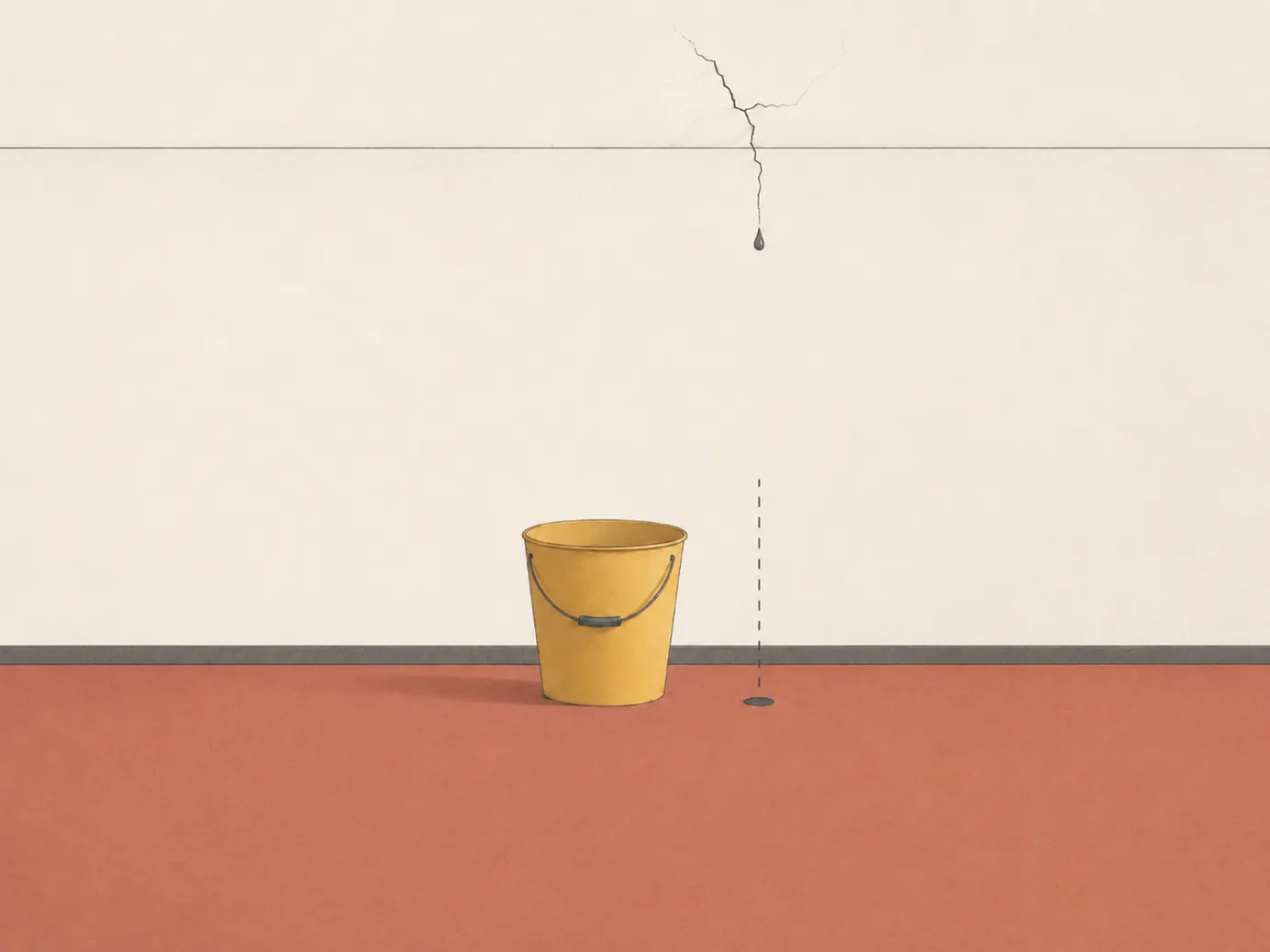
Your experience, once opened doors, must now be repackaged before anyone recognises it. Your reputation, which once carried weight, now needs explaining. The work that once felt like it was opening the next door now just seems to keep you at the current one. Decisions that once felt like the right call now carry a charge of anxiety in a way they didn’t used to.
You can still do many of the things that used to work, only to find that nothing has an effect.
The old rules gave us a simple explanation for disappointing outcomes. If something didn’t work out, you must not have worked hard enough. You made the wrong decision, got the timing wrong, or were never quite as capable as you thought.
And sometimes that’s true. We do misread things. We hesitate and wait too long. We cling to old roles, plans, and identities when the evidence is staring us in the face, telling us to do otherwise. Personal responsibility doesn’t just disappear because the world has become harder to read.
But that’s not the whole story.
Our first mistake is to treat every stalled outcome as a personal failure. Often, the problem isn’t simply effort, judgement, or character. It’s fit. It’s what happens when inherited rules meet changed conditions.
The old instructions may still sound perfectly reasonable. The problem is that they no longer describe the world we’re living in with the same accuracy they once did. That gap, between the rules we were given and the conditions you are actually in, is what we’ll explore here.
The Inherited Bargain
Most of us grew up with some version of the same deal, even if nobody ever quite said it out loud.
Usually, it came through our parents, teachers, first bosses, careers advice, pension leaflets, mortgage conversations, and all the ordinary background noise of adult life. Work hard. Be reliable. Build your experience. Stay useful. Buy somewhere if you can. Save a little each month. Keep your head down, move up gradually, and don’t take unnecessary risks.
These are the things that, if you do enough of them and for long enough, later life would reward you with a reasonable measure of security.
It’s not as if anybody handed you a contract. It just seeped into everything – into the careers
advice you were given at school, in the way people talked about moving up the ladder, settling down, building something. It was included in the first pension form you signed, but you did not fully understand it. The assumption was baked into every aspect of life: that if you behaved responsibly for long enough, life would become more stable, not less.
This was the old rulebook. It linked effort to outcome, outcome to progress, progress to stability, and stability to the sense that you were building something real. You didn’t need to
become rich or be brilliant. You just had to be responsible, patient, useful, and hardworking enough for the system to return something broadly predictable.
But that contract never worked equally for everyone – did it?
That old bargain was shaped by class, gender, race, geography, education, inheritance, health, luck, and the kind of work you just had the fortune to enter. That old bargain carried its own terms and conditions, ensuring plenty were excluded from it altogether. Millions followed the rules and still found themselves exposed to a story of fairness by institutions that were anything but fair.
The point here isn’t that we should yearn for a golden past when the rules were just. They were not. The point is that they were allowed to be plausible. They didn’t need to work perfectly for everyone. They only needed to feel reliable enough – and for long enough – for enough people to organise a life around.
And for long enough, for enough people, that old bargain did just that. It gave parents something to tell their children. It gave motivation and ambition a shape, and life a rough sequence to follow.
Yet just below the surface lay an assumption most of us did not know we were making. That whole bargain depended on the world around your effort staying stable enough for that effort to add up.
Employers had to reward loyalty often enough for loyalty to make sense. Housing had to become a stabiliser over time, something that gradually reduced pressure rather than kept adding to it. Pensions had to feel predictable enough that setting money aside felt like a sure thing rather than an act of faith. The employers, the banks, the labour market – they all had to hold their structure long enough for individual effort to accumulate into something you could actually rely on.
The old rules did not just require effort from you. They required stability from the world around you.
That was the part nobody mentioned out loud.
The Promise Was Always Conditional
And yet, for most of us, that stability was precisely what we assumed: that the world would stay steady enough for our effort to add up.
That was the hidden condition. It wasn’t just that you worked hard, saved carefully, built experience, and kept going. It was that the systems around you were still able to turn those things into something. Your effort needed somewhere to go. Your knowledge and skills needed a workplace that could still recognise their value. Your savings needed a housing market that rewarded patience and a pension system that kept its promises. Your experience needed employers who still knew what to do with someone who had been around long enough to know things.
When those systems were fairly steady, effort could feel almost physical. You could sense it accumulating. A year became a track record. A track record became trust. Trust became promotion, reputation, security, opportunity, or at least some kind of movement. Nothing was guaranteed, obviously. But there was enough continuity for the story to hold together.
That continuity is weaker now.
For many people, work no longer follows a single track. The long career inside one organisation — the kind where loyalty and competence slowly accumulate into seniority, security, and a better title — has become the exception rather than the rule.
Some people saw that coming and built portfolios of revenue streams. They went freelance, became consultants or creators, or started something of their own. Others didn’t choose it so much as arrive at it, after a restructuring, a redundancy, or a role that vanished into software, AI, or a cheaper region.
This instability isn't just a corporate story. It shows up differently depending on how you work. A freelance proofreader builds a specialism over a decade and watches the market move toward generalists or AI. A small business owner sees his margins squeezed by platforms that did not exist when he started. A creator builds an audience and then watches the algorithm change.
The specific experience may be different, but the underlying dynamic is the same. The connection between effort and reward has become harder to predict, and therefore harder to trust.
That does not mean the effort was wasted. It means the structure that once absorbed and rewarded that effort has changed shape.
This is hard to absorb because we usually feel it as something personal. The meeting where your role is questioned. The dozens of applications that lead nowhere. The odd coolness around experience that once commanded respect. The client who doesn’t renew. The platform that changes its terms overnight.
But just below the surface, something larger has shifted. The business no longer needs the work in the same way, values it in the same way, or wants to pay for it in the same way. So, the problem is not always that we climbed the ladder badly. Sometimes it is that the ladder no longer leads where it used to. Sometimes it has been removed altogether.
You can see a similar shift around housing and retirement. The old model assumed that housing would, over time, become less of a pressure and more of a foundation. Buy early enough, pay down debt steadily enough, stay disciplined enough, and the home would become part of your security. Even renting often sat inside a wider assumption that later life would somehow be held together by pension income, state provision, family structure, lower costs, or a more settled life.
But housing does not become stable simply because someone has been responsible. Rent can follow you into later life. Mortgage costs can rise. Divorce, relocation, adult children, repairs, care obligations, and regional price differences can keep pressure alive long after the old script expected it to ease. A decision that looked sensible at the time can suddenly become fragile when the conditions around it change.
Likewise with retirement. The old story treated it as a fairly contained final phase: learn, earn, save, stop. But longer lives have stretched that idea almost beyond recognition. The years after full-time work may now involve decades of shifting health, changing income, family dependency, care costs, housing questions, and some form of continued contribution or paid work. The question is no longer simply: have I saved enough to stop? It is: can I stay flexible enough to live through several different versions of what comes next?
That is not a minor adjustment. It is a completely different problem.
Then there is the pace of change itself. Technology is part of it, but it is bigger than technology. Industries restructure. Professions change. New platforms emerge, setting the terms for entire categories of work. The thing that made a decision look sensible can now change before the decision has had time to pay off. A skill that once felt current becomes ordinary. A credential that once opened doors becomes the starting point. A market that once rewarded depth can change course and reward speed, visibility, or whoever does it cheaper.
We might be tempted to call all this uncertainty, but that makes it sound too vague. The deeper issue is that many inherited life decisions were built around slower-moving institutions. Careers, housing, retirement, education, and professional identity all depended on a world that gave people enough time for effort to convert into security.
When that world becomes less stable, the same effort produces more variable results.
A responsible decision can still be responsible and still not produce the expected outcome. A strong career can still be strong and still become exposed. You can be competent, disciplined, and serious, and still find that the expected next step does not appear.
Effort has not disappeared. It is just that the rails that used to carry it have weakened.
The Cruel Arithmetic of a Life Half-Built
This is why the dislocation can feel so sharp after 45.
By this point, you are far from starting from scratch. You are already well inside a life. You have made decisions, carried responsibilities, taken on costs, built relationships, stayed in certain places, left others, chosen work, left work, gone back to work, started again once or twice, and told yourself a story about what all of that was adding up to.
You don’t simply leave those choices in the past. They travel with you. A mortgage, a rental commitment, a family role, a pension assumption, a professional identity, a place you live because it once made sense — these things become the fabric of your daily life. They decide what is easy to change and what is not. They decide how much risk you can take, how much uncertainty you can absorb, and how quickly you can move when the ground starts to shift.
So, when the old rules weaken, you don’t experience that as an abstract idea. It arrives inside a life you have already half-built. That explains why a shock at 54 is not the same as one at 27. Yes, it may still be frightening, but you register it differently.
Earlier in life, you have more time to recover, experiment, explain the gap, move to a new city, change careers, take the strange job, live cheaply, or call the whole thing a learning experience. Later in life, that same disruption may collide with dependants, ageing parents, higher fixed costs, health questions, pension gaps, or simply the exhaustion of having to start again just when you were beginning to think the hard part was behind you.
And then there is experience itself, which becomes a more complicated asset than most of us like to admit. Yes, experience is valuable. It gives you judgement, pattern recognition, steadiness, and the ability to hold more than one thing in your head at once without panicking.
But the world doesn’t always know how to read that value anymore. Some markets have got better at rewarding whoever is newest, cheapest, or loudest — and worse at recognising whoever is most experienced. You can have the kind of wisdom that only comes from decades of work and still find yourself having to prove it, package it, or explain why it matters.
That is what makes this phase of life so disorienting. We can adapt to change — we always have. The harder part is that many people built responsibly around assumptions that are no longer reliable.
The cruel part isn’t that the rules changed. It’s that most people only find out after they have already organised a life around them.
How Outcomes Become Accusations
When that finally dawns on us, most of us do the same thing. We blame ourselves. We start going back over the evidence, not in a forensic way, like a historian, but usually late at night and with a very poor sense of proportion.
Why didn’t I see this earlier? Why did I stay so long? Why did I trust that employer, that market, that adviser, that plan? Why didn’t I save more, move faster, retrain sooner, take the risk, avoid the risk, buy earlier, sell earlier, leave earlier, stay longer?
The mind is an expert at turning uncertainty into accusation. We can always find something. There’s the meeting we should have read differently, the job we should have left, the house we should have bought, the course we should have taken, the difficult conversation we avoided because, at the time, we were already tired and had a hundred other things to carry.
This is part of what makes the old rules so powerful. They trained us to read outcomes backwards. If things worked out, the choices must have been wise. If things did not work out, something must have been missed, mishandled, or misunderstood.
Sometimes that is true. We do make mistakes. We overstay in roles or jobs that no longer work for us. We protect identities that no longer fit. We look away from what we already know because facing it feels inconvenient, expensive, embarrassing, or simply too much to deal with at the time. Not everything that goes wrong is someone else’s fault.
But the opposite is equally false: that every disappointing result is evidence of poor character, weak judgement, or insufficient effort. That is where the old rules become punitive. They take a complicated outcome and shrink it into a private verdict on ourselves.
If a market shifts, it becomes: I should have seen it coming. An employer restructures, and it becomes: I should have known. Timing, luck, family load, health, age, geography, housing, employer behaviour, and economic change get compressed into one accusation: I really should have done better.
That form of self-accusation can dig deep because it sounds so responsible and mature — so much like accountability. But that's not responsibility. It's self-punishment.
You can make a reasonable decision inside one set of conditions and live to see those conditions change. You can be diligent and still become exposed. You can build something solid and still find that the market has changed. You can do the right thing and later discover that it was far less protective than promised.
Of course, none of that lets you off the hook. But it does shrink the hook.
Personal responsibility still matters — in how you respond, what you notice next, what you refuse to keep repeating, and how honestly you face the conditions you are actually in.
But when you’re asked to take personal responsibility for rules you did not write and conditions you did not create – that’s responsibility itself becomes distorted.
Why Effort Stopped Being Enough
None of this means effort is pointless. That would be a lazy conclusion as well as a dangerous one. Effort still matters — so does discipline, competence, the willingness to learn, adapt, recover, stay useful, notice what has changed, and make difficult decisions before you feel completely ready to make them.
But effort isn’t a magic bullet either, and the world it moves through has changed. The old model treated effort a bit like a railway track. Do the right thing. Keep going. Stay on it long enough. Arrive. There might have been delays along the way, a few diversions, the odd setback, but the basic assumption was directional. Sensible action would eventually carry you towards a recognisable destination.
All you needed to do — literally — was to stay on track.
That model was comforting because it gave progress a moral clarity. Keep your head down. Do the work. Build the record. Make the payments. Stay the course. But the world we’re now in behaves less like a railway track and more like the weather. Does effort still matter in weather? Yes. It matters how you steer, what you carry, how quickly you notice the sky changing, whether you have somewhere to shelter, and whether you keep going or wait it out.
But here’s where effort takes on a different meaning. On a track, the same input produces roughly the same output. Work hard, stay on track, and arrive. But in weather, the same action can produce different results depending on conditions you didn’t choose and couldn’t always see coming — timing, sector, health, geography, asset prices, family load, employer behaviour, institutional change, and luck.
One person enters a sector just as it expands, while another enters just before it contracts. One buys a home before prices accelerate, but another is kept out by timing. One spends years building exactly the kind of expertise a market suddenly wants. Another builds something just as the market stops paying for it properly.
Neither story is explained by effort alone.
That's the part the old rules struggle to admit. The old rules treated uncertainty as an interruption — a fallen tree on the line, something to clear before the proper journey resumed. Call it grit, call it resilience, call it reinvention. The assumption was always the same: get through this, and the track will be waiting on the other side.
Except now, you cannot assume the track is waiting. More often than not, there’s only weather.
So, your question can never just be: am I working hard enough? That’s an obedience question and makes sense when the rules still broadly describe the world. In a stable system, obedience can look like wisdom. You don’t need to question everything all the time. You just need to trust that the rails stay parallel enough to keep moving.
But when the world stops behaving predictably, obedience can become a trap. You can work harder inside a role that is losing value. You can keep saving according to assumptions that no longer match the housing market or your lifespan. You can chase a version of security that depends on employers, pension providers, and governments behaving the way they once did. You can keep asking whether you are disciplined enough, when the real question is whether the discipline is pointed in the right direction.
Does that mean you should abandon responsibility? Of course not. But it does mean you have to be smarter about where you direct it.
The answer isn't to try harder, but to understand the weather you’re actually in before deciding where to put your energy.
Still Speaking With Authority
Old rules don’t vanish quickly. And these haven’t. They’re still there in the way people judge themselves at the end of a bad week. And they're still there in the way parents give advice to their children. And you can see their presence in the questions friends ask over coffee, in the assumptions behind pension planning, in the way employers talk about careers, and in that private little calculation we all make about whether we are doing well or falling behind.
They still speak with authority because, for long enough, they were right. Work hard. Be sensible. Stay useful. Keep progressing. Save steadily. Don’t fall off the path. Make good decisions now, and things will become more secure over time.
For sure, some of that advice still matters, and some of it is still wise. Our challenge isn't to prove every old rule wrong. It's just that those rules were built for a world that no longer exists in the same form.
And the gaps between what they promise and what they can deliver are getting harder to ignore. They can no longer fully account for longer lives, unstable careers, housing pressure, shifting institutions, changing technology, or the strange experience of doing all the right things and still finding yourself exposed.
You don’t need to throw everything away. That would be too easy, and plainly wrong. But you do need to know which parts are still strong and which have stopped working without anyone telling you.
Before you decide what to do next, you must know whether the rules you are following still describe the world you are in.