The Old Work-Save-Retire Model Doesn't Work

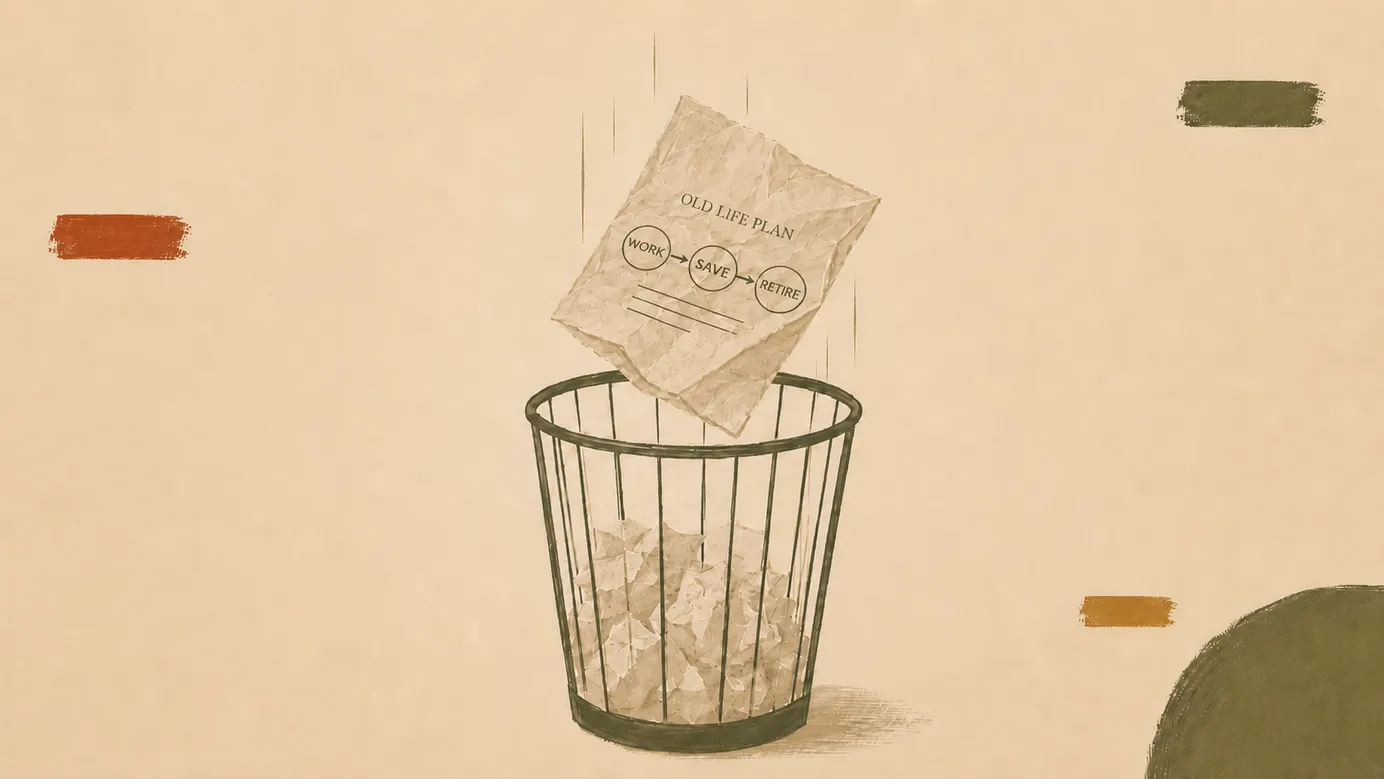
Summary: The old life plan was simple: work, save, retire. Real life no longer follows that sequence. The Interlude Café helps people broadly 45 to 75 make sense of the point where work, money, and life no longer align.
Not so long ago, there was a version of a life you were handed without anyone quite saying it out loud.
It went something like this: you built a career, saved what you could, and then at some point — sixty, sixty-five, whenever the figures allowed — you stopped, stepped back, and that was the final chapter of your life: "retirement."
Back then, work was the long middle and retirement the shorter reward at the end. That end wasn't supposed to last very long.
For a long time, that sequence did its job rather well. It was the assumption underneath the big life decisions such as the mortgage, the pension, the milestone birthdays, telling you roughly where you were meant to be and what should come next.
For some people, this truth still holds. If it holds for you, this article probably isn't for you.
But if you're somewhere in your late forties, fifties, sixties or early seventies, then maybe you've started to notice something. That life plan you've been following no longer describes the life you're actually in. If so, you're not imagining it.
The old work-save-retire model no longer fits the lives people are actually living these days.
Why the Old Model Made Sense
Although we might question that old model today, it certainly wasn't a foolish way to run your life. But that world worked differently, in ways that made perfect sense if you followed the old sequence.
Back then, it was the model our parents were handed, and the one that was passed down to us without us even challenging it: start work, pick a direction, stay roughly on track, and let the years do the compounding.
Your employer organised more of your working life. If you were lucky enough to have a final salary pension, it drew you a fairly straight line from your last pay packet to your retirement income. Houses cost a smaller multiple of what people earned.
In general, it was easy to see how all the pieces fit together.
And because we didn't live as long as we do today, retirement was meant to be brief. A short closing chapter, measured in a handful of years, not the two or three extra decades many people today now face today.
That old script was simple enough to live by without thinking about it. Work, get on, pay down the debt, build the pension, stop when the time came.
It didn't work out that way for everyone, of course. Plenty of people were shut out by ill health, insecure work, the demands of caring for someone, or simply the luck of which decade they were born into. Still, as the default story, it had real pull. It told you what getting ahead was supposed to look like, and it gave your employer, your social circle, your family, and the whole financial industry the same timetable to plan around.
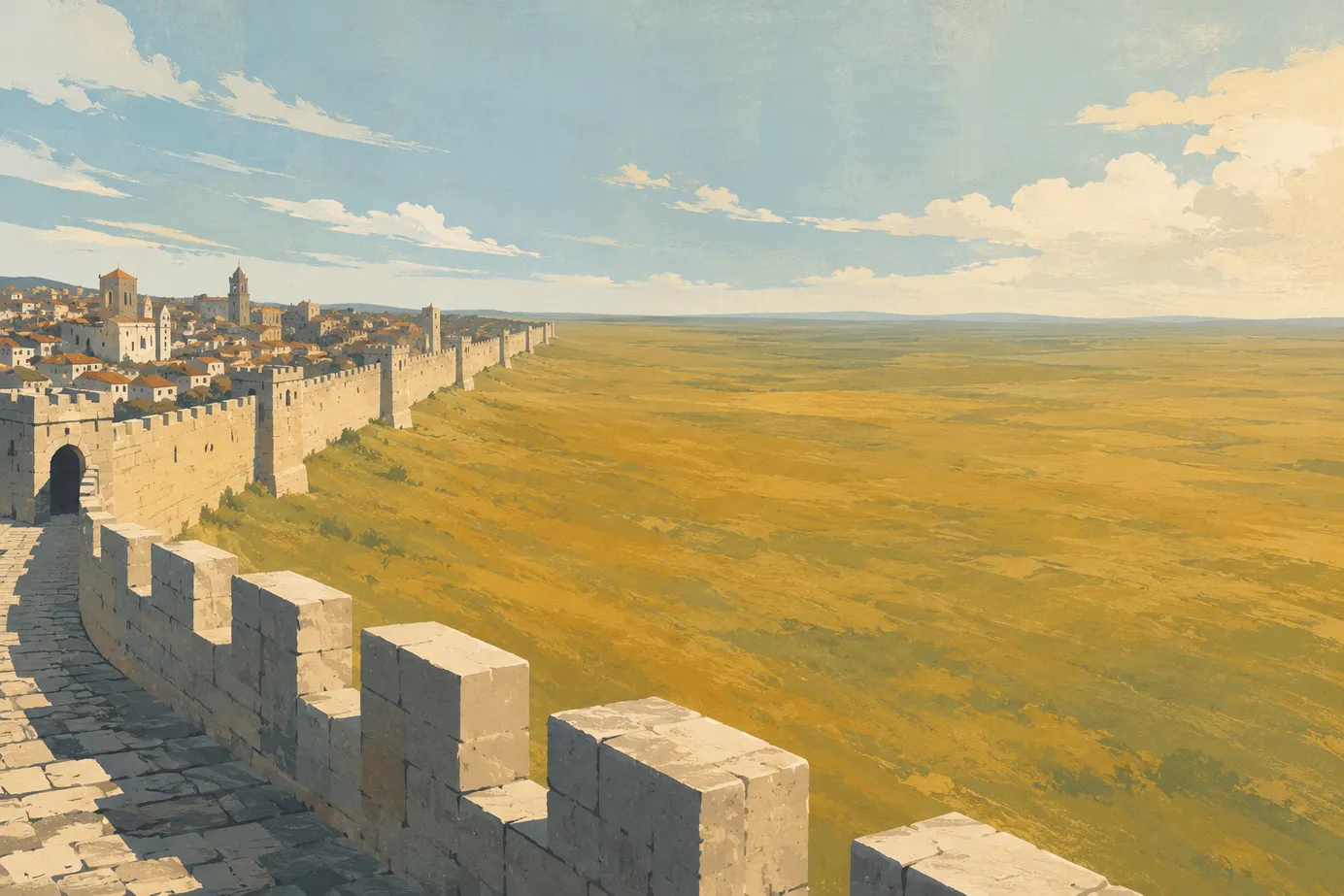
But here's the problem: a script can hold its authority long after the world that made sense of it has moved on.
And if you're reading this article, I suspect that's broadly where you find yourself right now.
So What Changed?
Let's start with the simplest thing: we're living a lot longer. And those extra years don't just get tacked onto the end, the way you might imagine. They stretch and reshape the whole middle of your life.
Getting to sixty in decent health these days is less of a challenge than it used to be. If that's the case, you might easily have another twenty-five or thirty years ahead of you.
Think about that for a second. That's far from a gentle wind-down to the finish line. It's still a huge chunk of life to be lived, and it doesn't just need paying for. It requires planning, a bit of creativity, and a fair few decisions to be made along the way.
That's way too much living to cram under one tired little word like retirement.
Then there's work. Remember when a career was supposed to run in a straight line? Train for something, apply your new skills and knowledge, climb steadily to the next level. But we know that's not how it goes anymore. We've seen how whole industries get reorganised overnight. We've seen how the skills that once made us valuable in 2010 can now turn us obsolete in a single breath. And those senior roles start vanishing at exactly the wrong moment, just when your experience runs deepest. Even worse, your age can start closing doors at the precise moment you've got the most to offer.
But here's the part the old map never accounted for: a whole new economy has opened up around you, and it's far broader than the consulting-and-board-seats route your predecessors might have taken. People are building audiences and income from a kitchen table. They're writing newsletters, creating courses, freelancing across borders, selling expertise as a product rather than a day rate, and turning a niche skill or following into a business that didn't exist five years ago.
Some of it is serious money. Some of it is a side income that buys options. For some people, all this is genuine freedom. For others, it's just insecurity dressed in nicer clothes. And for plenty of people, honestly, it's both at the same time.
And then there's money, the third big shift, and the one that hits closest to home. You know the deal by now: put in the years and it quietly adds up to a comfortable retirement.
Except now it doesn't, not reliably anyway.
You can sit there staring at a pension statement with a perfectly respectable number at the bottom and still have no real idea what it actually means for you. What does it buy you next year, let alone in fifteen? You can own a house worth a small fortune and still feel the pinch at the end of every month. You can look completely sorted on paper and quietly wonder whether any of it stretches far enough to cover a long life.
The spreadsheet might add up beautifully, but it's the life it's supposed to pay for that won't quite balance.
And finally there's the part nobody warns you about: life rarely gets simpler as you get older. If anything, it gets more crowded, tangled, complicated.
You might find yourself helping your parents through their final years at the same time you're helping your kids with a deposit, or pulling them through a rough patch, all in the same month. Or the job you assumed would see you through to the end can disappear in a restructure, or the business you spent a decade building can stall just when you were counting on it most. A marriage can come apart at fifty-eight and quietly upend every assumption your plan was built on. Illness can rewrite the whole timetable overnight, no warning given.
That comforting idea that the demands of family gradually fall away, leaving you free to get on with your own plans, can often turn out to be pure fantasy.
__
Put all of that together and the old clean choice, work or retire, on or off, stops describing anything real. For a lot of people now, the honest question isn't whether to stop. It's something messier.
Do you keep earning, but in a different way?
Drop a few days? Build something small of your own?
Sell what you know?
Step back without stepping out altogether, and stay open to whatever comes for as long as you can?
None of that is a tidy transition from one stage to the next. It's messier, more open-ended than that, and the old model was never built for it.
Where Work and Money Stop Aligning
For most people, the pressure shows up first, and hits hardest, right where work and money meet.
This is the moment that nagging feeling at the back of your mind finally takes real shape, and the old script, the one you'd half relied on to tell you what to do next, goes completely quiet.
We've all been there. The questions that start surfacing are not any that a careers adviser can't really help you with, or a retirement planner for that matter.
These are the questions that fall between the cracks, which is probably why they nag at you the way they do, far more than any of the well-meaning "age-friendly" advice people keep serving up.
How much longer do you actually need to keep earning?
What kind of work even makes sense for the person you are now, rather than the one you were twenty years ago?
Does your financial plan fit the life that's genuinely coming, or the one somebody mapped out for you back when the world looked completely different?
Can all that experience you've spent decades piling up actually turn into income? Are you retiring here?
Downshifting?
Starting again?
Or just trying to keep your options open a little longer?
So the question was never really just Can I afford to stop? There's a bigger, harder one sitting right underneath it:
What kind of work, income, contribution and life actually fit together now?
And that second question is a completely different beast from the first. The old one was simple enough: there was work, and then there was rest, with a clean line drawn between them. You were on one side of it or the other.
But this new question doesn't play by those rules at all.
You might need to carry on earning, just not in the way you always have. You might want to stay in the game without crawling back into the role that burned you out. You might be utterly done with corporate life and nowhere near done with having something worth offering. You might be ready to ease off the pace, and not even remotely ready to vanish.
This Isn't a Personal Failure
Here's something I've noticed a lot recently, talking to people: there are so many genuinely capable, accomplished people who reach this stage and are privately convinced they've somehow messed it up. And the first thing they do is blame themselves.
You might catch yourself running the audit late at night. You should have saved more, moved earlier, stayed put longer, or gotten out sooner. You should have seen the redundancy coming, picked something safer, or maybe something braver.
And sure, some of that is just ordinary hindsight. After all, everyone's made a few decisions they'd love to take back. But the bigger truth sits underneath all of it, and it's worth saying plainly.
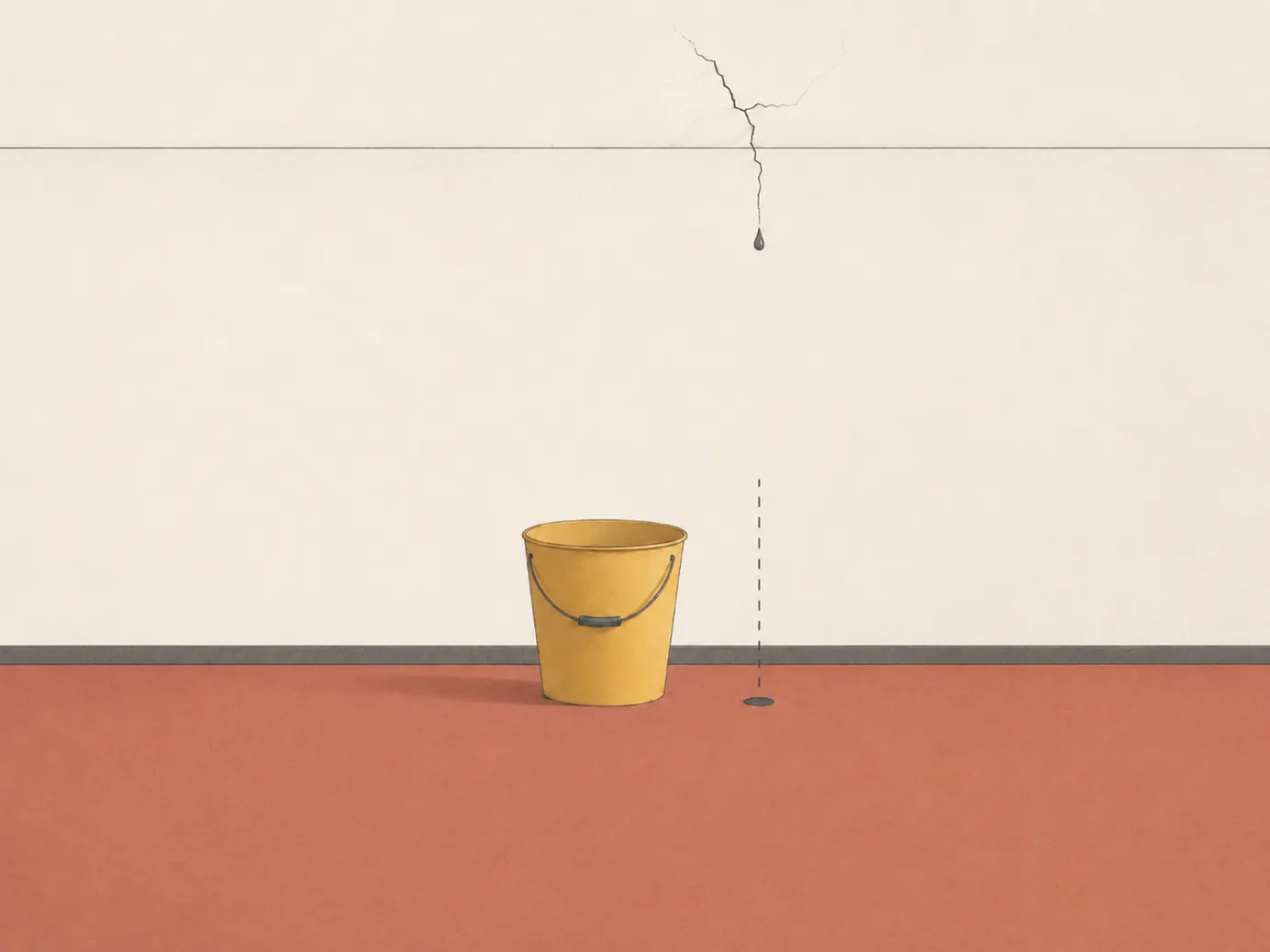
This is not a personal failure. It is a structural mismatch.
What do I mean by that? Simply that the old model weakened, and the institutions built around it have been slow to catch up with real life. Think about how your employer sees you: recruitment, retention and exit. And that's about the size of it.
Or think about how the financial industry talks about you, filling your whole life under accumulation and then decumulation, as if you were a pension pot rather than an actual person. Even the wider conversation does it, shoving everyone past fifty-five into one of two tidy boxes.
Either you're clinging on, or you're winding down. And almost none of it has anything to say about the long, messy, in-between stretch – the interlude – where most of life is actually being lived these days.
Look, you're probably not trying to relive your thirties or prove you can still outwork everyone half your age. You're just trying to make the next stretch of life hang together, to work out how the money, the time, the energy, the family stuff, and that nagging little question of what you're actually for these days all slot back into place somehow.
And if that leaves you feeling confused, that's not a flaw in you. It's just that life changed an awful lot faster than anyone bothered to update the language we were handed to make sense of it all.
So Where Does The Interlude Café Come In?
The IC starts exactly where that old script runs out of useful things to tell you.
We're built for people like you, whose work, money and life no longer fit the sequence they were promised. People who are experienced, still very much in motion, and genuinely weighing up what comes next.
Do you keep earning? Change shape? Ease off? Build something new, or just stay open and optional for a good while longer?
This is a place to think all that through properly, to make sense of what we call postlinear life: the long, uneven stretch that opens up once work, money, family and identity stop moving in the tidy old order.
What it won't do is sell you a fairytale about reinvention, or pretend this all comes down to sorting out your finances.
And you'll also notice we don't lean on the usual words like midlife, ageing, longevity, and retirement. None of these words actually defines you and each one takes something structural and real and shrinks it into a cliché: a mood you're passing through, a slow decline, a finish line that no longer exists. There are other publications for that type of thing.
What really matters isn't your age, or the stage of life you're in. It's the gap that's opened up between the work you can do, the money you need, and the life you've still got ahead of you.
That gap is the real problem, and the one that's hardest to see clearly on your own.
So, Where Do You Start?
If you've read this far, you're probably already feeling the gap this article is about. If that's the case, then the next step is to get specific about where it's showing up for you.
If the pressure is mostly financial, such as income, assets, housing, care, and whether your money actually stretches, start with Money.
If it's mostly about work, start with Work: your value now, how you might earn differently from this point on, the age biases you might be running into, and what kind of work actually fits. Much of what looks like an age problem is really a gatekeeper problem, and it loses most of its power the moment you're earning on your own terms, where you control the gate, and nobody else.
Culture is the one to read when you want to step back and see the bigger picture. This category is where we look at how society itself is changing around all of this: why the old institutions are still lagging behind, why midlife is such an outdated term, and why the language we inherit keeps letting us down. The articles can help make sense of it all when making crucial decisions about work and money.
Beyond those, Health, Lifestyle, People and Learning cover the rest of the ground: staying well over a longer life, how and where you want to live it, the relationships that carry you through, and the appetite to keep learning that doesn't switch off at any particular age.
You'll find your own way in. Most people start where it aches, and follow the rest from there.
If you want the bigger picture first, two places to go. Start Here lays out how The Interlude Café fits together. And our Manifesto sets out what we believe about this stretch of life and why we're building for it.
The old work-save-retire model no longer works for many people. Figuring out what comes next is the whole reason we're here.
Find Out Where You Stand
Our Work-Money-Life Snapshot helps you see where your own pressure is coming from, and what the old plan may be missing.
Take the Snapshot, then sign up to The Interlude newsletter for clear, unsentimental thinking on the long stretch ahead.
→ Discover More About the Work-Money-Life Snapshot
Not ready for that yet? Sign up to The Interlude newsletter below for weekly updates that provide clear unsentimental thinking on the long stretch ahead,
Ghost excerpt / summary
For decades, the deal was simple: build a career, save, retire, step back. If that map no longer matches the life you are actually living, you are not imagining it — and it is not your fault.